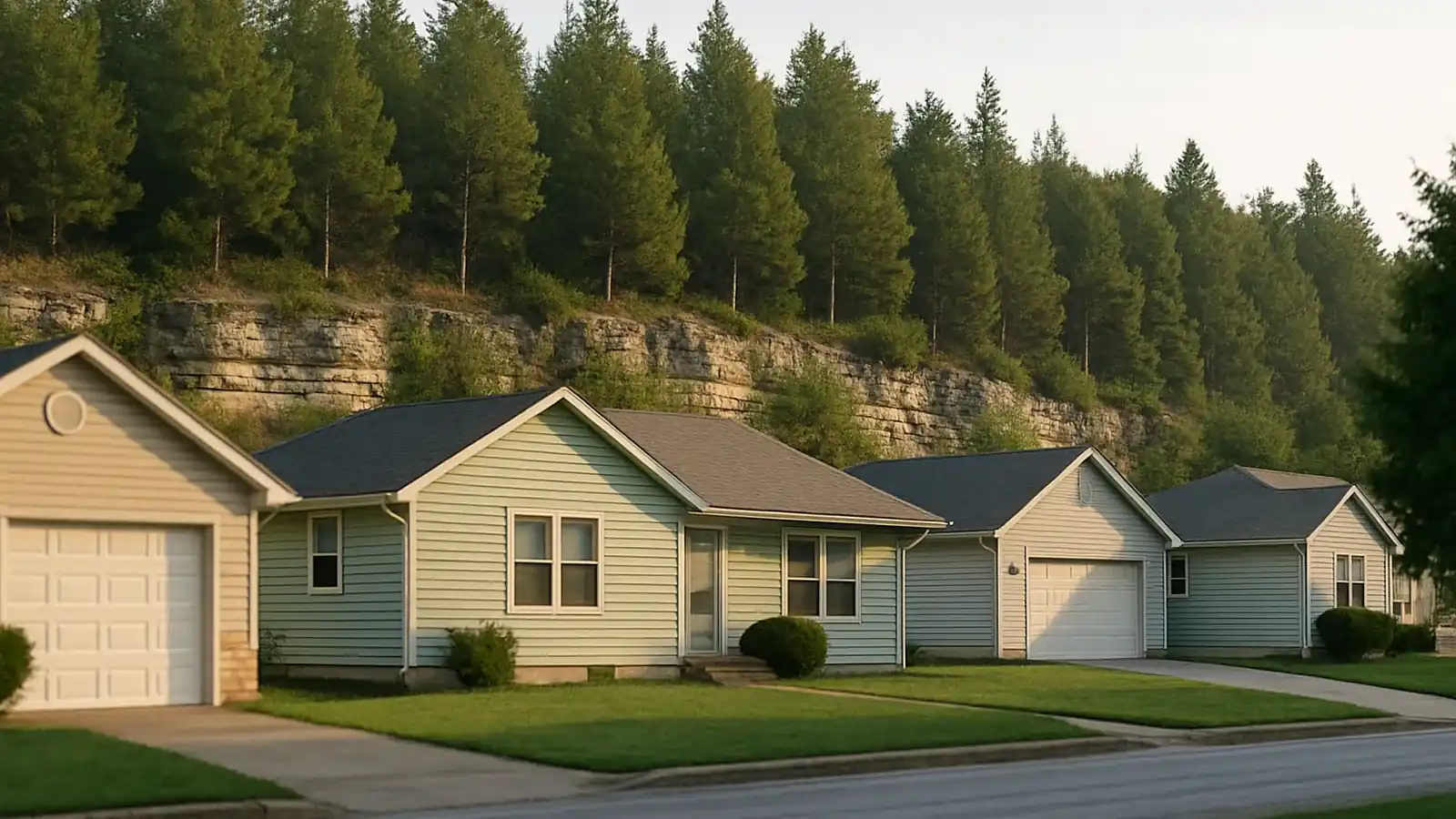
Foundation piering in Springfield costs $1,200–$3,000 per pier, most jobs running $4,000–$15,000. Thin Ozarks soils mean piers often reach true limestone refusal in 8–20 feet: a shorter trip to better rock than most metros can buy at any price.
Why plateau footings settle, what rock refusal buys you, and how karst changes the checklist without changing the physics.
Two ways down on the plateau
Springfield settlement writes in two hands. The common one is ordinary: thin residual clay gains and loses moisture, cycling support under footings the same way clay does everywhere, drought summers pull, wet winters push, corners drop a fraction at a time. The rarer hand is karst's: storm water moving through carved limestone carries fines out of the soil above, and support goes missing faster and more locally. One corner, one season, sometimes one memorable week of rain. The evaluation reads which hand wrote yours, because the pier plan (and its urgency) differs.
What refusal at limestone means
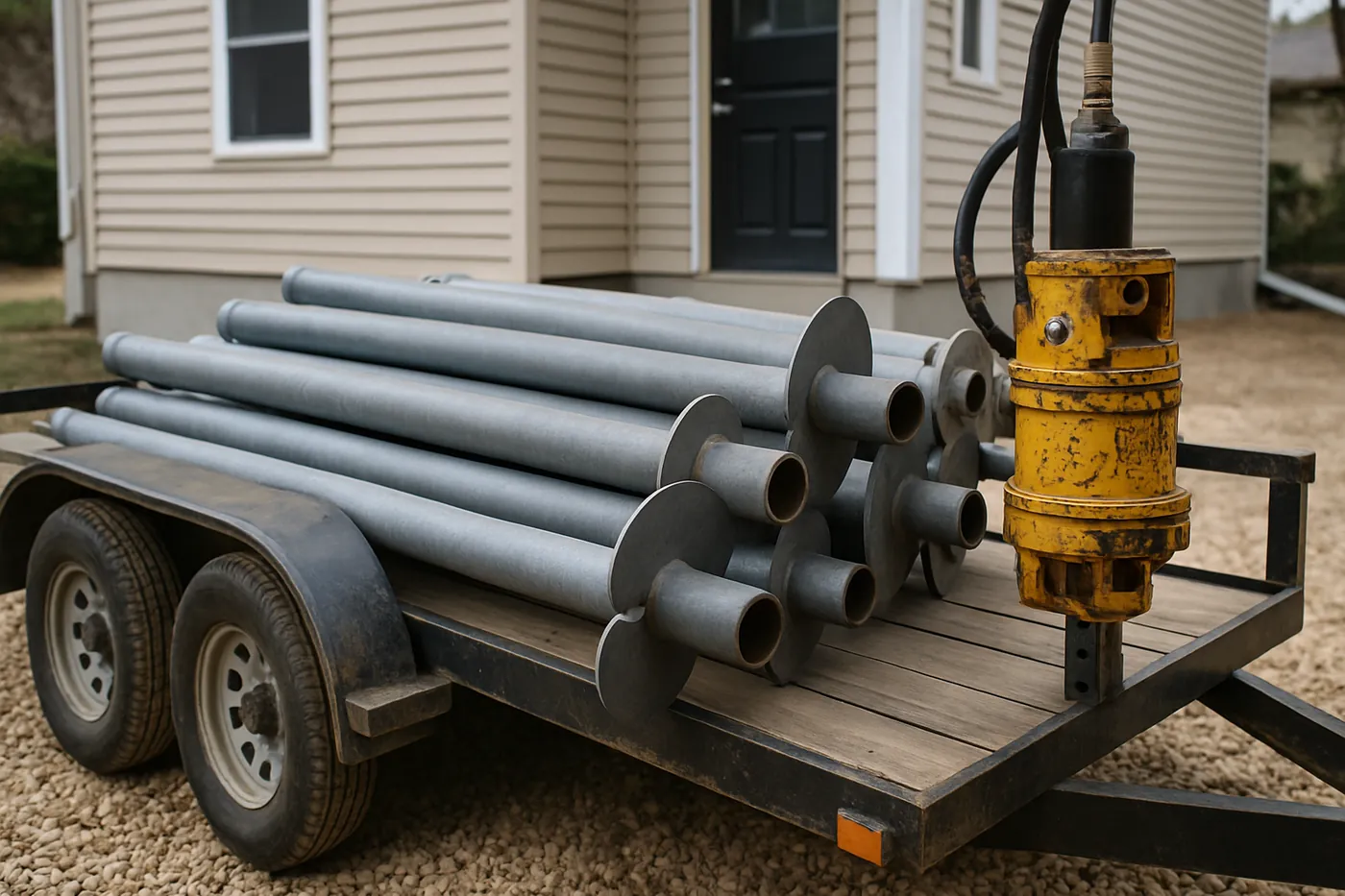
A pier driven to competent Mississippian limestone is standing on some of the oldest load-bearing material in Missouri. Sections advance beneath the footing until drive pressure proves sustained refusal; a bracket transfers the house's weight; the soil above (cycling clay, migrating fines, all of it) becomes scenery. On this plateau that trip is often short, which is why Springfield piering carries some of the best value-per-dollar in the state: less steel in the ground, more certainty under the house.
| System | Drive | Plateau fit |
|---|---|---|
| Push piers | Pressed to refusal under structure weight | Brick and heavier stock; decisive on shallow rock |
| Helical piers | Torque-verified screw advance | Frame homes, additions; careful spec near carved zones |
The karst checklist, worked honestly
- Pattern review: rain-correlation and localization checked before the plan is drawn
- Drive logs on every pier: refusal proven, suspect benches driven past
- Water rerouted, where underground flow fed the settlement, drainage rides the scope
- Mapped-feature candor: lots near documented sinkholes get told so, with depth specs to match
Most Springfield piering is ordinary work at ordinary prices, and when it isn't, you should hear it from the specialist first, in writing, with the reasoning attached.
Helical piers and the shallow-rock advantage
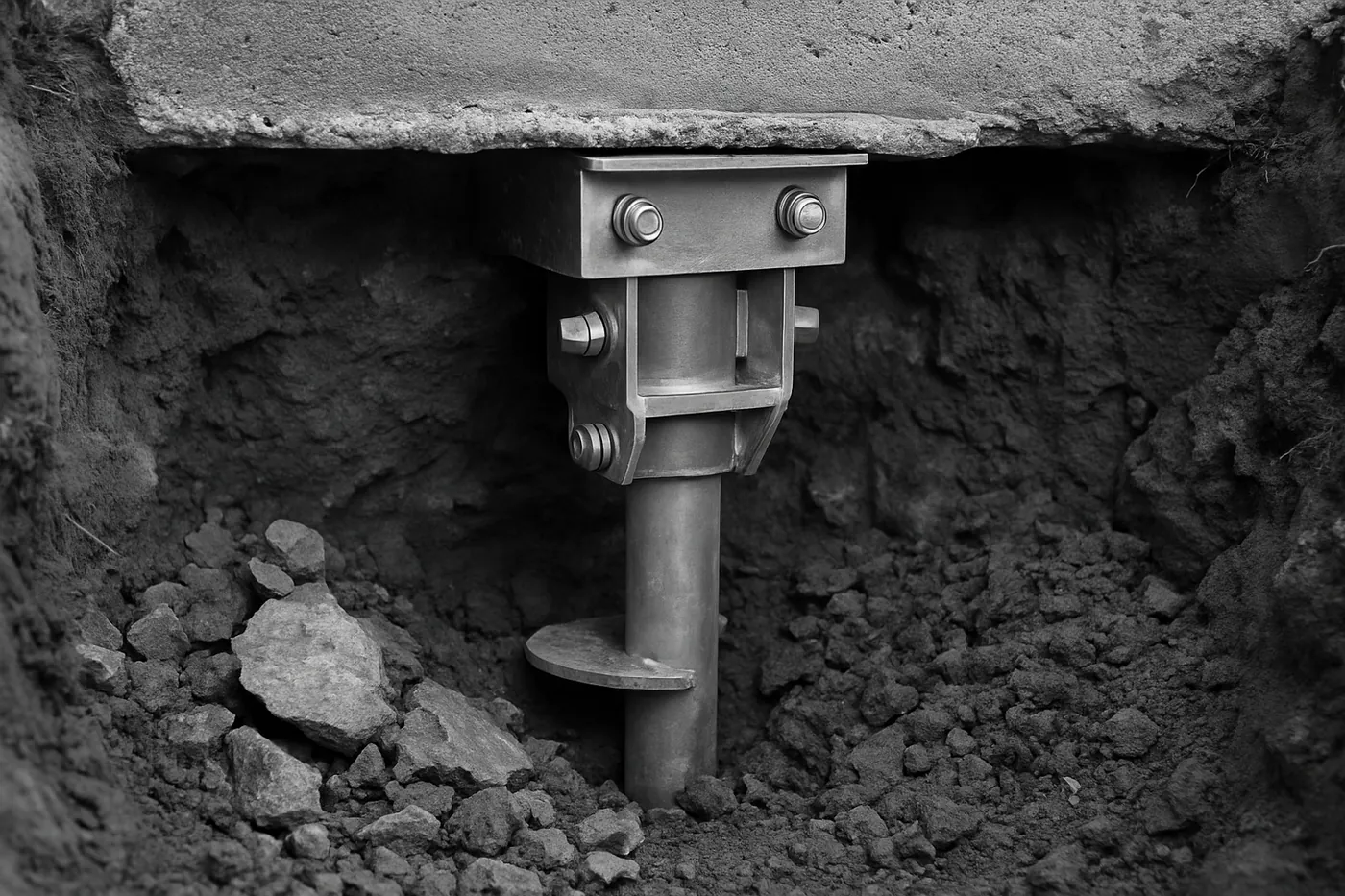
Springfield sits on one of the friendlier piering geologies in Missouri: thin residual soils over Mississippian limestone, which means load-bearing rock is usually close enough to reach economically. That geometry favors helical piers: steel shafts with welded helix plates, screwed to a specified torque rather than driven to a gauge pressure, because torque converts directly to capacity and the installation reads clean on thin soils. Where the rock runs deeper or a structure is heavy enough to want it, driven push piers still appear in good scopes; the evaluation's probe data decides, not a house preference.
The karst caveat belongs in every piering conversation here: limestone that dissolves is limestone with occasional voids, and Greene County's own database maps roughly 8,000 sinkholes. Piers land on competent rock, which is why sudden or accelerating settlement gets investigated before it gets quoted, and why a torque log per pier should be part of the paper you keep. Most installs run two days to a week, lived-in throughout, lawn back by next season.
Piering questions, straight answers
How deep do piers go in Springfield?
To rock refusal, and on the Springfield Plateau that's often refreshingly close: residual soils over Mississippian limestone run thin across much of the metro, so piers frequently seat in 8 to 20 feet. Where a carved zone deepens the profile, piers should drive until the gauges prove competence, not until a chart says stop.
What does piering cost here?
$1,200-$3,000 per pier, three to eight piers on typical settled runs: $4,000-$15,000 for most jobs, inside Missouri's $3,800-$12,500 structural band. Shallow rock keeps many Springfield jobs at the friendly end. The evaluation counts before anyone quotes.
How do you know the rock a pier hits is solid?
Drive behavior tells the truth: competent limestone gives a decisive, sustained refusal; a carved shelf or boulder gives readings that stall then yield. Ask for pressures logged on every pier; where the pattern argues for it, piers get advanced past suspect benches. On karst, verification is the job.
My settlement seems to follow big rains. Does that change the pier plan?
It sharpens it. Rain-triggered settlement suggests water is moving fines underground, so the plan pairs piers (structure off the misbehaving soil) with drainage that reroutes the water story. Piers alone fix the symptom permanently; the pairing fixes the neighborhood the symptom came from.
Can the house be lifted back level?
Usually. Refusal at rock gives lifting hydraulics a superb platform, and settled sections walk back toward original elevation with cracks visibly closing. Where finishes counsel restraint, the specialist may stabilize instead; ask for that in the scope first.
Get a Springfield foundation evaluation
Tell us what the house is doing (cracks, sinking corners, doors gone stubborn, water where it shouldn’t be) and we'll pass your request on for an evaluation. A local specialist who works in Springfield will call you back.