
Exterior foundation waterproofing in Springfield seals the wall but requires full-depth excavation; interior perimeter drainage runs $2,500–$8,000 and handles the Plateau’s mixed drainage either way. Most occupied homes choose interior drainage plus careful discharge routing.
The two drainage personalities of Springfield lots, and how each system serves them.
One metro, two drainage personalities
Thin residual clay over fractured limestone gives Springfield lots split personalities. Where the rock’s joints run open, water vanishes downward and basements stay improbably dry. Where the clay cap seals a pocket — or a joint plugs with fines — water perches against foundations exactly as it would on any Midwest clay, every wet spring. Two houses on one street in Rogersville can live in different hydrologies. That’s why the evaluation reads your lot’s actual behavior — stains, seasonal patterns, where the yard holds water — before any system is priced, and why the waterproofing page’s drainage fundamentals matter here more than brand-name systems do.
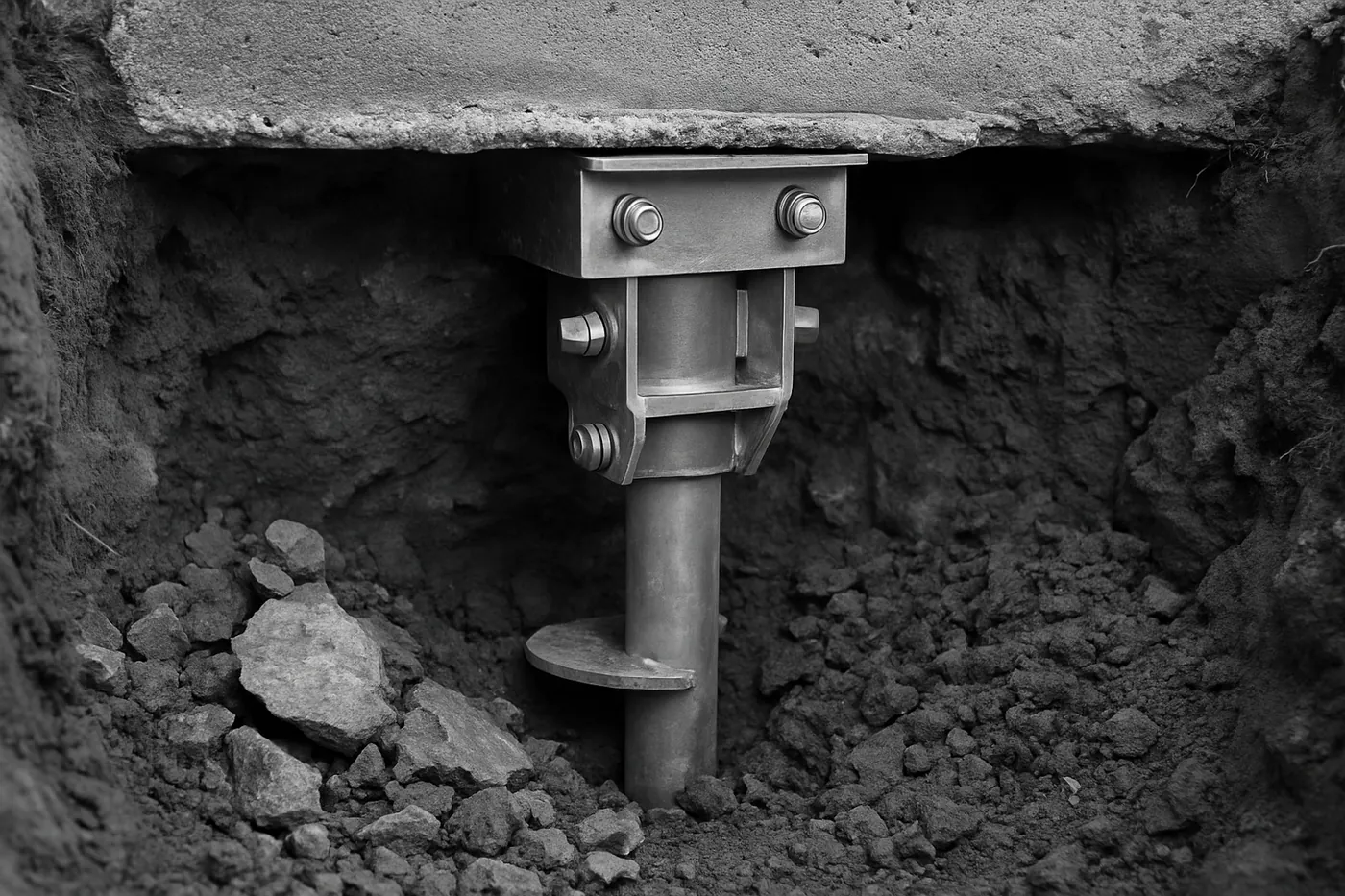
The two systems, honestly compared
| Exterior membrane | Interior drainage | |
|---|---|---|
| Promise | Water stopped at the wall face | Water exits at the footing; floor stays dry |
| Springfield cost | Per wall — excavation dominates | $2,500–$8,000 full perimeter |
| Disruption | Full-depth dig around an occupied house | Interior slab-edge work, days |
| Frost exposure | Coatings ride backfill above the 24in line | Below frost entirely |
| Mixed-drainage lots | Bets the problem is the wall | Handles either personality |
| Best case | Wall already open for structural work | Occupied house, seasonal seepage |
The karst discharge rule
Where the water goes matters more here than in most metros. Concentrated discharge poured into a yard depression is precisely the mechanism that moves fines downward on karst ground — the slow plumbing of the Plateau. So Springfield systems carry an extra design rule: sump and downspout discharge disperses, away from the foundation and away from any low spot or mapped feature. It costs little at install and it’s the difference between solving a basement problem and feeding a ground problem. The same logic makes surface routing — gutters, grading, extensions — genuinely preventive here, for the house and the lot alike.
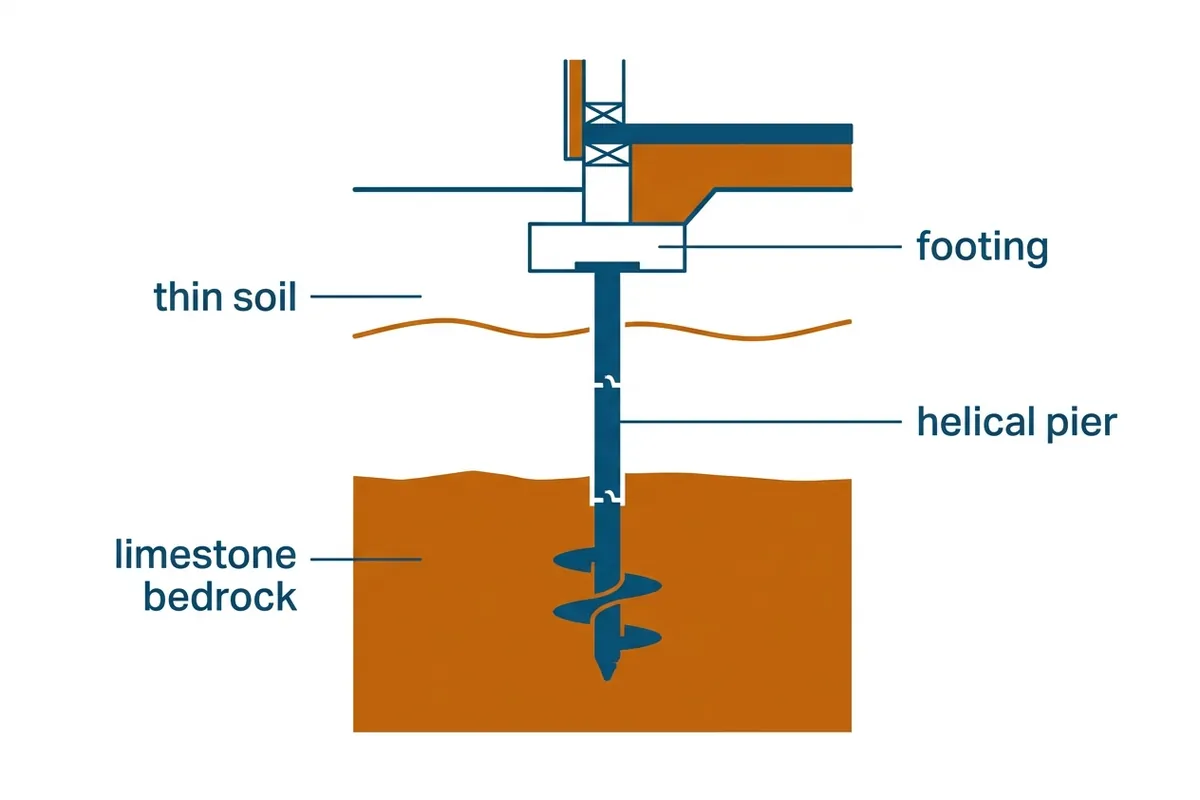
Where waterproofing meets foundation repair
When a wall taking water is also taking pressure — the bowing wall case — structural work may open the exterior, and membrane plus footing drain go in for the cost of materials while the trench exists. When moisture has already moved the house, the settlement question resolves first: relevel once, waterproof once. Sequencing lives in the written scope; every price lives in the cost guide.
What the system needs from you afterward
Drainage work fails from neglect long before age. Once a year, clear the discharge outlet, confirm the water still runs well away from the house, and walk the perimeter after the first hard rain to catch any channel the runoff has re-cut. Clean the gutters — on a grade-level fix they are part of the system. If a sump is involved, test it with a five-gallon bucket rather than trusting the light. And keep the karst discharge rule permanently in force: dispersed, well away from the foundation, and never into a sink, a swallow hole, or a low spot that drains too well. Concentrated discharge is how a drainage fix quietly becomes a void problem.
Waterproofing questions, straight answers
Doesn't karst ground drain too well for wet basements?
It drains fast — until a path clogs or the thin clay cap seals a pocket, and then water sits exactly where you don't want it. Springfield basements see both modes: quick-draining lots that stay dry for years, and clay-capped pockets that hold water against a wall every wet spring. The evaluation reads which lot yours is before anyone prices a system.
Which system fits Springfield's geology better?
Interior drainage for most occupied houses — $2,500 to $8,000 for a perimeter channel and sealed sump — because it handles whatever the ground delivers without betting on which drainage mode your lot runs. Exterior membrane earns its excavation when a wall is already open, or when one wall's defect is the whole documented problem.
Where does the water from my sump discharge safely here?
Away from the foundation and away from any depression. On karst, discharge routing carries an extra rule: concentrated water poured into a low spot is how fines migrate into voids. We route discharge to disperse — not into the low corner of the yard that never quite drains, and never toward anything the county database maps nearby.
Does the 24-inch frost depth change the comparison?
It mildly favors interior. Footings sit below a modest 24-inch frost line under the Springfield code, and interior systems live below the slab, untouched by winter. Exterior coatings ride backfill through the freeze-thaw the Ozarks winter delivers, which shortens their working life relative to the trench-day promise.
What should I fix before buying any system?
Roof water, first and always — and on this ground it's cheap prevention twice over. Downspout extensions, grading that falls away, and dispersed discharge protect the basement and starve the mechanism that moves soil fines downward. A share of Springfield seepage calls end at the gutters; every remaining system gets smaller for the work.
Get a free Springfield foundation evaluation
Tell us what the house is doing — cracks, sinking corners, doors gone stubborn, water where it shouldn’t be — and we'll schedule an evaluation with photos and crack measurements. We reply the same business day.