
Most Springfield foundation repairs proceed on a free measured evaluation; an independent structural engineer — or on karst-flagged lots, a geologist first — earns the fee when diagnosis is contested or the ground itself is in question. Against repairs running $3,800–$12,500, independent judgment is cheap protection.
Who does what on the Plateau, the cases that need each, and how the sequence runs.
What did you just notice?
Most people arrive at this question having seen one specific thing and not knowing how worried to be. The usual list: a crack that has opened wide enough to slide a coin into, a door that stopped latching this season, a floor that feels like it slopes toward one wall, brick that has stepped apart above a window, or a surveyor's report that used the word movement without saying how much.
None of those, on its own, means you need an engineer. What decides it is whether anyone disagrees about the cause — because that is the question an engineer is paid to settle and a contractor cannot settle about their own quote. If a crack is widening and nobody disputes why, a measured evaluation is enough. If two companies have looked at the same wall and told you different stories, that is when independent judgement is worth its fee.
If it is urgent — a wall visibly bowing, a floor dropping in days rather than seasons, water arriving somewhere it never has — the order changes. Get it looked at now, and sort out who was right afterwards.
Three professionals, three questions
A contractor evaluation — ours is free and measured — answers “what moved, how far, and what would fixing it cost?” with elevations, crack maps, and a priced scope attached to an interested bid. A structural engineer answers “why did it move and what repair is sound?” — stamped, independent, no repair revenue behind it. A geologist or geotechnical engineer answers the question this county wrote into its code: “what is the ground itself doing?” Springfield’s Land Development Code requires geologist mapping before construction on lots with visible sinkholes — and repair work near karst symptoms deserves the same order of operations.
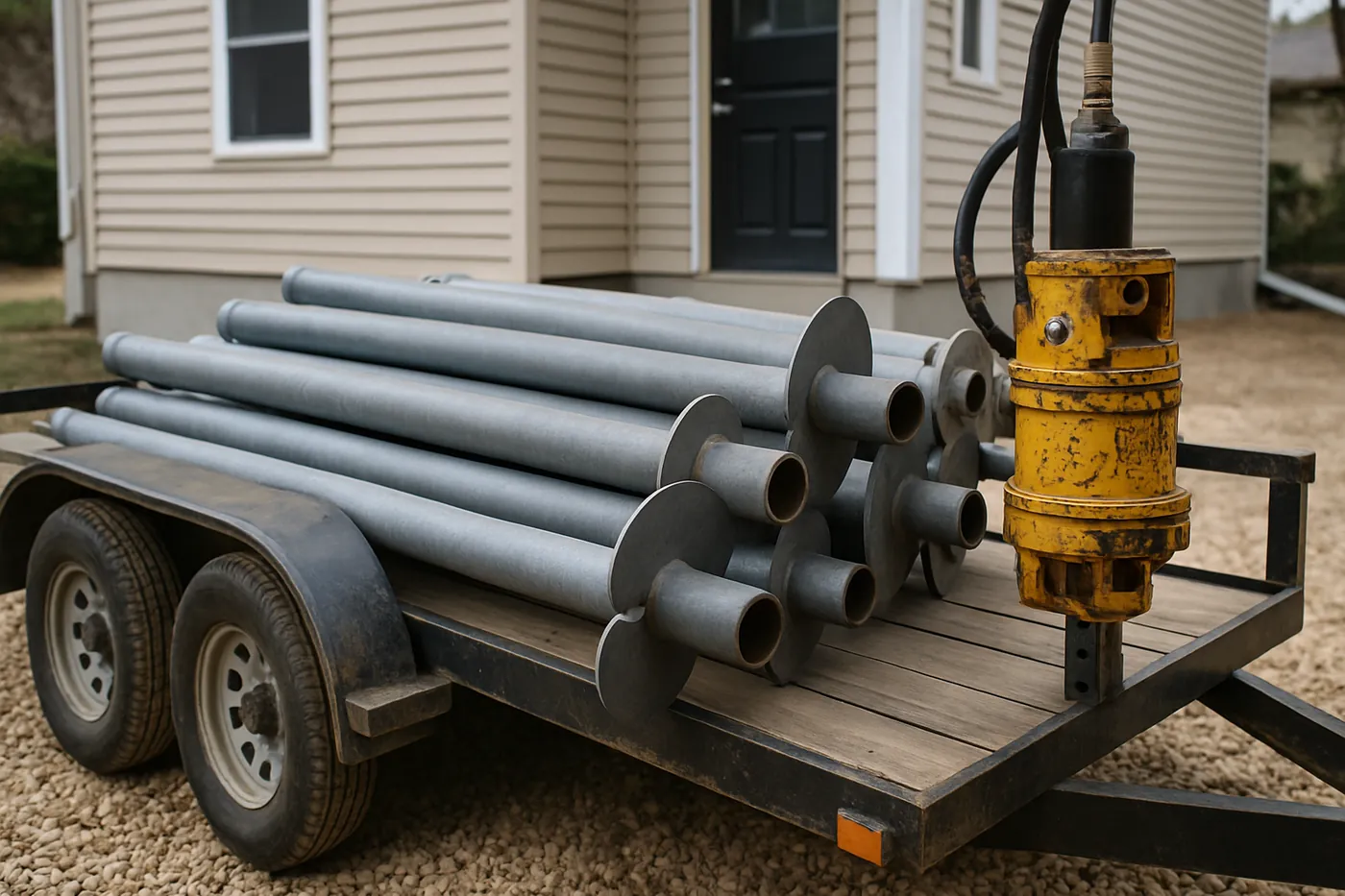
Who to call first, by situation
| Situation | Start with | Why |
|---|---|---|
| Cracks or slopes tracking the seasons | Contractor evaluation | Free, measured, priced — the ordinary case |
| Movement that ignores weather, or a yard depression | Geologist / geotech review | The ground question precedes any repair design |
| Buying near a mapped county feature | Independent engineer + records | The negotiation needs unsold judgment |
| Bids disagreeing on cause | Independent engineer | A stamped tiebreaker beats the wrong repair |
| Adjuster calls collapse “settling” | Independent engineer | Causation opinions move adjusters |
| Severe movement, designed-repair territory | Engineer, then contractor | Design first, installation to spec second |
Why the order matters on karst
Steel transfers load downward, and on this ground “downward” is a question with 8,000 documented local answers. Piering over a raveling void buries money and worse; that’s why any karst flag in the settlement diagnosis stops the bidding and starts the ground review. Nearly every Springfield job resolves to ordinary soil work — measured free, priced plainly — and the discipline of checking is what makes “nearly” a promise instead of a guess. The insurance page covers the adjuster version of these disputes.
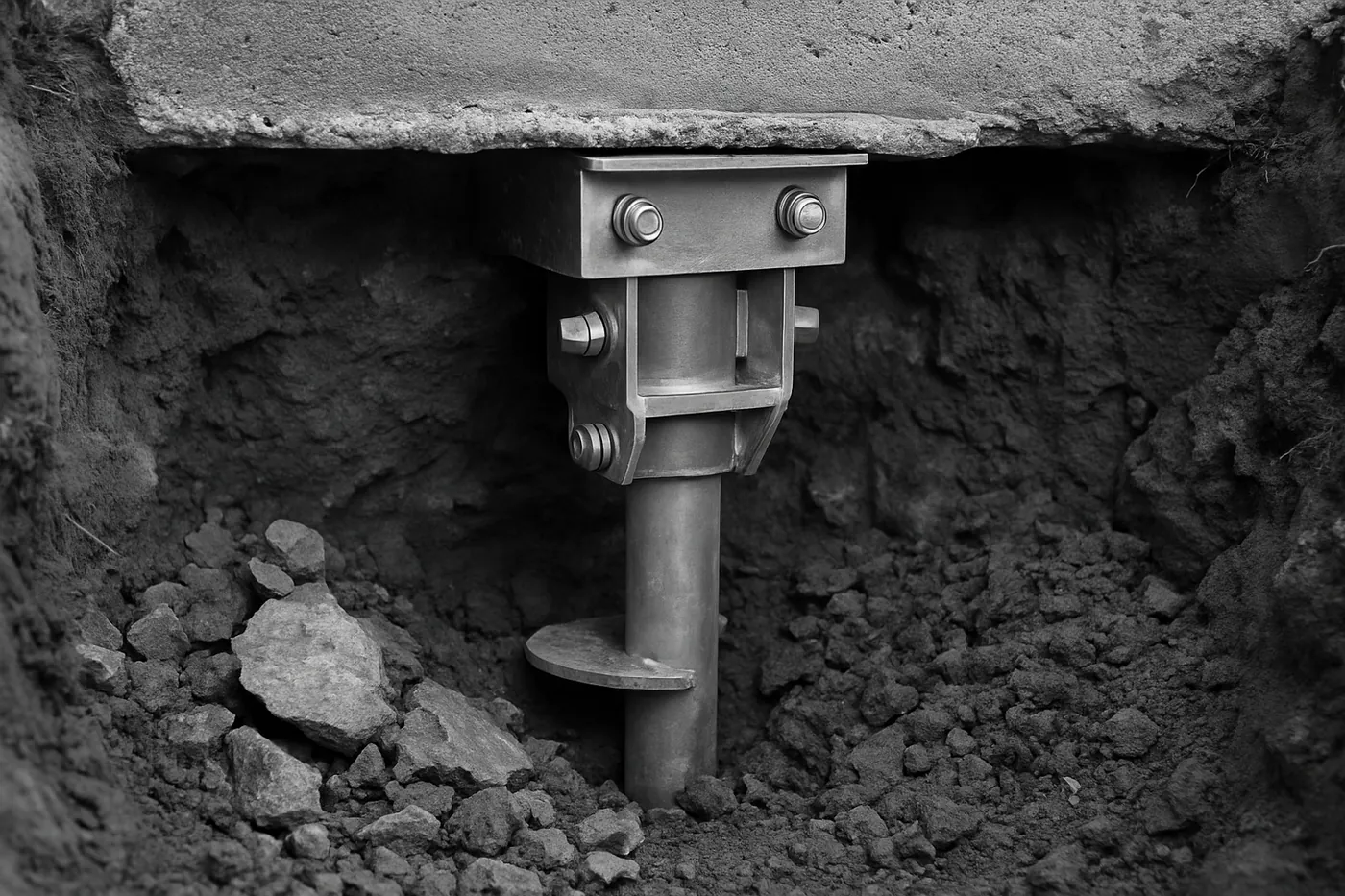
When both are on a foundation repair job
The engineered sequence runs: ground read where needed, repair designed, then installation to prescription — every pier’s torque or refusal logged against the spec so verification happens on paper. You finish holding the ground report where one was needed, a stamped design, a documented install, and a transferable warranty: the full stack a future buyer’s inspector wants on Plateau ground. Costs live in the cost guide.
What a report worth paying for contains
Judge the report, not the credential. A useful one carries an elevation survey in numbers rather than adjectives, a stated cause, a specific remedy — pier type, spacing, and the depth or capacity it must reach — and the stamp standing behind all three. Here it should also state whether karst is involved and, if the answer is yes or maybe, say so in the language a geologist’s scope picks up from. Greene County’s development code already treats mapped sinkholes as a professional question rather than a contractor’s judgment call. What you don’t want is a letter restating your cracks that ends with “consult a foundation contractor” — on this plateau that sentence skips the only question that mattered.
Engineer questions, straight answers
When does Springfield's code actually require a geologist?
For construction on a lot with a visible sinkhole: the Land Development Code requires a geologist to map the feature's boundaries before building. Repair work isn't new construction, but the code tells you how seriously this county takes its ground — and when repair symptoms point at karst, we borrow the code's logic and get geotechnical eyes first.
Engineer or geologist — who does what here?
The structural engineer reads the building: cause of movement, severity, stamped repair design. The geologist or geotechnical engineer reads the ground: what's under the lot, whether a feature is active, where competent rock actually is. Karst-flagged cases may need both — ground first, then structure. Ordinary settlement needs neither; the free survey answers it.
When is independent judgment clearly worth buying?
Pre-purchase near any mapped feature — the county database is public and the negotiation needs a number nobody profits from. When movement ignores the seasons. When bids disagree on cause. When an adjuster attributes collapse to 'settling.' And whenever a repair would be designed rather than cataloged. Routine seasonal settlement, staying put: the free survey suffices.
What does your free evaluation contribute to those cases?
The measurements everything else builds on: floor elevations, crack widths, plumb readings, the drainage walk, and a records check against the county database. That file feeds an engineer's review, a purchase negotiation, or an insurance dispute — and it's yours either way. We'd rather hand clean data to independent eyes than bid on ground nobody has read.
Will you install to an engineer's specifications?
Yes — on karst-flagged or contested jobs we insist on the order: ground read, repair designed, then steel. We bid the specified scope line by line and log every pier's torque or refusal against it so verification happens on paper. If we believe a spec misreads the measurements, we say so in writing to you and the engineer, never by substitution.
Get a free Springfield foundation evaluation
Tell us what the house is doing — cracks, sinking corners, doors gone stubborn, water where it shouldn’t be — and we'll schedule an evaluation with photos and crack measurements. We reply the same business day.